Search
nude


Howling Bells
Howling Bells
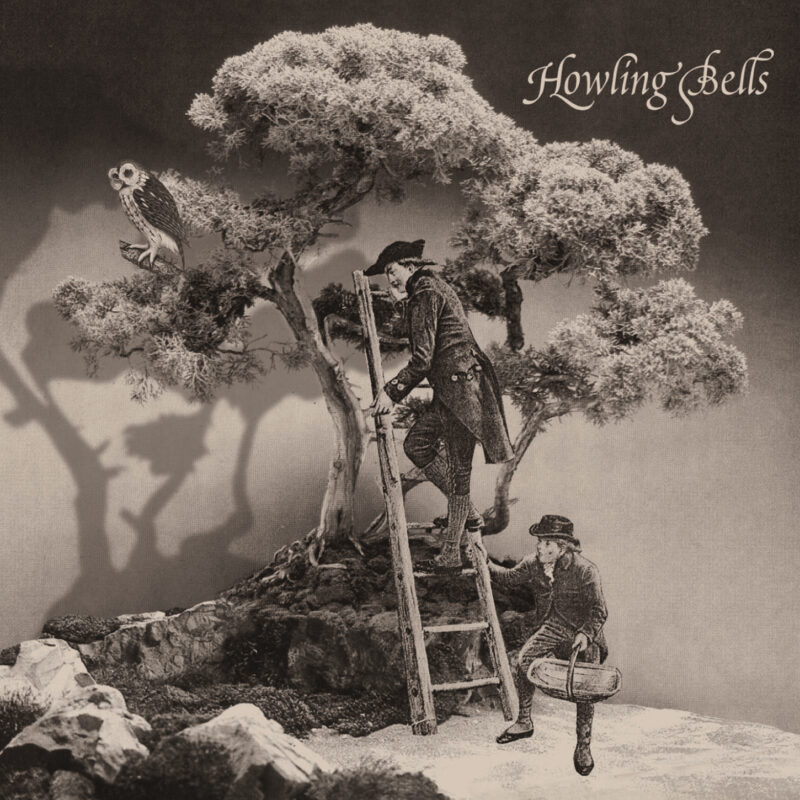
Howling Bells
Howling Bells
Album — NUDE30 — 2 Oct 2026
12"
Buy/Stream:
https://ffm.bio/howlingbellsdinked“OK, now I can finally listen to Setting Sun on vinyl and be reminded all over again why I love Howling Bells” Chris Martin
“There was a time when we thought great records would just keep rolling in. We didn’t realize we were living in a golden age until it was gone. Twenty years later, Howling Bells stands as a testament to what we’ve been missing” Brandon Flowers
“A haunting, beautiful and at times emotionally brutal debut by one of alt-rock’s unsung talents” Brett Anderson
“Listening to Howling Bells’ debut album was a cultural awakening for me back in the early 2000s. It reminded me that writing artful, sophisticated pop music was absolutely possible. Twenty years later, this record still sounds so fresh and exciting” Anna Calvi
“We toured with Howling Bells twenty years ago and these songs still sound as magnificent now as they did then. With the first pressing on vinyl we can sit back and enjoy whilst introducing a brilliant record to a new generation” Editors
– Twenty years later, Howling Bells’ debut album returns on vinyl. The Australian band’s debut remains one of the most alluring and mysterious works of the 2000s: twelve songs suspended between alternative rock, dream pop, and psychedelia, with Juanita Stein’s voice acting as a beacon amidst a fog of guitars.
– It is a celebration of a musical life built before social media, before algorithms, and before the possibility of jumping straight from a bedroom computer to a global audience. It is released featuring four previously unreleased demos on a bonus 7-inch included in the “Dinked” edition. And on November 6th, the band will return to the stage.
In 2006, Howling Bells’ self-titled debut album arrived somewhat out of left field, just as British rock was still recovering from the guitar-heavy overload of the 2000s and new generations were seeking an escape from chart-topping indie pop. Howling Bells hailed from Australia, yet they had no intention of sounding like an Australian band. No sunshine, no surf rock, no Antipodean clichés. Their world was one of wet streets, motels, neon lights, misguided desires, and a nameless melancholy.
Produced by Ken Nelson—who had previously worked with Coldplay, Gomez, and The Charlatans—the album possessed an almost cinematic quality. The songs seemed to begin a few minutes before or after reality: liquid guitars, deep bass, restrained drums, reverb, and *that* voice.
Juanita Stein’s voice is the record’s gravitational center. It is a voice that doesn’t try to win you over; instead, it lets you come closer. At times it sounds like a whisper, at others like a siren, and at others still, like something far more ancient and indecipherable. Pitchfork described it as “completely unexpected, boldly eccentric, and immediately commanding.” NME was more concise—and perhaps for that very reason, more effective: “An extraordinary album.” *The Guardian* spoke of “brutal and narcotic” rock ‘n’ roll, as if refracted “through the bottom of a glass,” while *MOJO* highlighted that “flawless and heart-wrenching” voice, capable of transforming “stories of pain and betrayal” into “something exquisite.” Twenty years later, the point is precisely… This: it wasn’t an album trying to sound modern. And that is why it hasn’t aged.
The Night Before Success
Howling Bells consisted of Juanita Stein, her brother Joel, and Brendan Picchio; they had forged their identity through years of gigging and songwriting in Sydney well before recording their debut album. The band emerged from that era, yet the music seems to hold a sense of nostalgia for something that hasn’t even ended yet. That is one of the album’s quirks: it sounds like a memory even as you hear it for the first time.
Ken Nelson’s production deliberately avoids muscular displays of power. There is no need to crank up the volume to prove the band can play. The instruments are allowed to breathe; guitars stretch out into the open spaces, while the rhythm section builds an undercurrent of tension. It is rock music, but without the need to announce it every thirty seconds.
And then there are the melodies. “Low Happening,” “Broken Foot,” “Setting Sun,” “Wishing Stone”—songs that conceal a pop structure beneath layers of atmosphere. This is where Howling Bells become particularly compelling. They don’t play dream pop because they want to dream; they play it because the world they depict already feels like a dream.
The twelve rooms of *Howling Bells*
The album opens with “The Bell Hit,” and this is no minor detail: it serves as the perfect gateway to a record that seems to unfold in a borderland between dream and reality, intimacy and the urban landscape. The original tracklist comprises twelve songs spanning just over 42 minutes; the new vinyl edition preserves that exact running order.
1. The Bell Hit
The opening guitar enters like a signal cutting through the fog. “The Bell Hit” needs no introduction; it begins right in the thick of the story. Juanita Stein enters with a voice that is at once fragile and commanding, while the band builds a guitar architecture around her that seems to consist more of space than of substance. It is an almost programmatic opening: a city falling apart, empty promises, the desire to change one’s life. The music, however, does not rush; it moves slowly, hypnotically, as if the future were something that could only be glimpsed. Today, the track also holds archaeological value. It is one of four demos recovered from the archives for the twentieth-anniversary reissue—presented in its original 2003 version—a home recording that allows us to hear the concept of Howling Bells before they truly became Howling Bells. The band included it on the bonus 7-inch accompanying the “Dinked” edition.
2. Velvet Girl
If “The Bell Hit” opens the door, “Velvet Girl” ushers in an elusive, sensual, and almost cinematic female figure. It is one of those moments where Stein’s songwriting demonstrates an ability to transform a romantic story into a landscape.
The music flows gently, yet a constant tension lurks beneath the surface; the sweetness is never entirely reliable. The guitars serve to destabilize that surface, while the vocals seem to recount the tale from an emotional distance that cannot be bridged. One of the album’s great qualities is already evident here: Howling Bells do not explain their characters. They let them appear and disappear.
3. Low Happening
Here arrives the band’s first major manifesto. “Low Happening” was the single that heralded the album—released as early as 2005—and was also the first song Juanita Stein ever wrote. The track depicts a dysfunctional relationship, yet musically, it steers clear of any conventional melodrama.
Bass and drums keep everything anchored to the ground, while the guitars do the opposite: they open up fissures, generate reverb, and make the song feel larger than the room where it was recorded.
This is the moment that reveals why the group was immediately associated with a cinematic, nocturnal style of rock. *Low Happening* doesn’t simply tell the story of a relationship crisis; it sounds like the soundtrack to someone coming home at dawn after making a terrible choice.
4. Broken Bones
This is the most physical, edgy, and almost visceral track. While *Low Happening* observed a relationship from the outside, here the pain seems to have transformed into sound itself. Yet, Stein’s vocals maintain that sense of detachment that defines the album: there are no cathartic screams, no shouted confessions. With Howling Bells, pain doesn’t explode—it simmers.
It is one of the songs that best showcases the band’s alternative-rock side without sacrificing their pop sensibilities. Here, too, Ken Nelson’s production succeeds by avoiding clutter; he allows each instrument its own space, letting the tension arise from the way the elements layer upon one another.
5. Wishing Stone
With this track, the album returns to a more explicit form of pop, yet one still shrouded in mist. It is one of the songs that best showcases Howling Bells’ ability to craft melodies that feel like instant memories. The chorus doesn’t aim for an explosion; instead, it prefers to weave its way in.
It was one of the album’s singles—alongside “Low Happening” and “Blessed Night”—and perfectly embodies the dual nature that makes this debut so distinctive: on one hand, songs that are instantly accessible; on the other, an atmosphere that immediately lifts them out of the realm of standard mid-2000s indie rock.
6. A Ballad For The Bleeding Hearts
The title might suggest a traditional ballad. Yet, Howling Bells take the ballad form and transport it to a far more unsettled emotional landscape. It is a song about wounded hearts, without ever becoming sentimental. Stein’s vocals maintain a beautiful ambiguity: she seems to be simultaneously inside the story and already looking at it from the outside.
The track closes the first side of the new vinyl edition; heard within the album’s sequence, it functions almost like a cinematic interlude—the curtain falls, but the story isn’t over yet.
7. The Night Is Young
Side two opens with a title that might seem optimistic. But in the world of Howling Bells, a “young night” is, above all, a promise of things that could go either very well or very badly.
The track holds special significance today because Juanita Stein has revisited the original demo, recorded at home in 2003. It serves as an early snapshot of the band—before the studio, before Ken Nelson’s production, and before the music industry entered the picture.
The new video accompanying the demo looks back at the Sydney of their youth: Bondi Beach, the city center, early gig venues, friends, skateboards, and all-ages concerts. The song thus unintentionally becomes a time capsule. Twenty years later, *The Night Is Young* is no longer just about the night: it speaks of the youth of the person who wrote it.
8. Across The Avenue
This is one of the album’s most atmospheric tracks—one where the landscape almost takes precedence over the characters. The road, the distance, what is happening on the other side: *Across The Avenue* seems built on the idea that something significant is always unfolding just out of frame.
This is a hallmark of Stein’s songwriting: rather than delivering a complete narrative, she leaves windows open. The listener is left to imagine what remains unsaid. And this is precisely where the cinematic comparison makes the most sense: not because Howling Bells write film scores, but because they think in terms of camera shots.
9. Setting Sun
Then comes the masterpiece. *Setting Sun* is arguably the song that best encapsulates everything Howling Bells were striving to achieve: an instantly catchy melody immersed in a suspended, ethereal production; a vocal that seems to drift in from afar; and a guitar capable of transforming a simple pop song into something almost metaphysical.
It is also one of the few songs on the album not born from Stein’s personal experience; instead, the lyrics reflect her feelings about the universe. The track was co-written with Brendan Picchio and released as a single in 2006.
It comes as no surprise that Chris Martin singled it out upon the album’s reissue: “OK, now I can finally listen to *Setting Sun* on vinyl and remind myself once again why I love Howling Bells.”
It is a song that has stood the test of time remarkably well because it doesn’t truly belong to 2006. It possesses an eternal quality: the setting sun, the end of the day, and the sense that every beautiful thing already holds the seeds of its own farewell.
10. Blessed Night
Night returns, naturally. But this is no longer the restless night found at the start of side two. “Blessed Night” is one of the album’s most sensual tracks, built on an almost physical tension between vocals and instruments. It is the moment where Howling Bells demonstrate that they can be seductive without becoming polished.
It was the album’s third single and confirmed the band’s success in forging their own musical language: atmospheric guitars, pop melodies, and an unapologetic melancholy.
11. In The Woods
This is the darkest moment. The title itself takes the band out of the city, yet not toward a comforting kind of nature. It is the forest of fairy tales at nightfall—a place where one can get lost, and where things that once seemed familiar take on a different shape.
The song stretches out the tempo and heightens the album’s hypnotic quality. It is one of the tracks where Ken Nelson’s influence is most palpable: rather than pushing the band toward a bigger sound, the producer allows silence and space to become part of the arrangement.
12. I’m Not Afraid
And then, the finale. “I’m Not Afraid” is brief—clocking in at just two minutes and forty-five seconds—and seems to deliberately avoid the convention of a monumental closing track. There is no need for a grand climax. It is a stark, understated conclusion—almost a statement of resolve following an album spent exploring vulnerability, love, failure, and change.
The title articulates what the music had been hinting at for forty-two minutes: fear was present, but it did not have the final word. Furthermore, the fact that the song is credited to Peter Stein—father of Juanita and Joel—adds another small, unexpected twist to the album’s family narrative.
The story behind the reissue
To mark the twentieth anniversary, the band initially considered recording a couple of new songs. But something didn’t feel right. Those songs sounded too modern, Stein explains—as if they belonged to a different era.
The search for old demos, meanwhile, turned into something of an archaeological dig. The album’s original demos had vanished. Every single one of them. Then, in a dusty bag filled with cassettes and CDs, Stein found something even more precious: her early home recordings of “The Bell Hit” and “The Night Is Young,” along with demos of “Hold On” and “Sunken Eyes.” A guitar, a bass, keyboards, backing vocals. Nothing else.
These are documents that tell the story of the record before the record existed—not the band as they arrived in the studio, but ambition before self-awareness. And that is likely the most fascinating aspect of the reissue: hearing four songs from a time when the band didn’t yet know they would become part of a twenty-year-long story.
The demo of “The Night Is Young” also serves as a bridge between the album and the band’s hometown. The song’s new music video is something of a home movie capturing Sydney in the early 2000s—Bondi Beach and the city center, early gigs, friends helping out with photos and videos, all-ages shows, and watching skaters on the beach. Stein describes it as “a sort of love letter to the Sydney we grew up in.”
It is a phrase that retrospectively illuminates the entire *Howling Bells* album. Because, listening to the record today, it speaks of more than just a band seeking its place in the world in 2006; it speaks of a generation that didn’t yet know how fast the world was about to change. The internet was becoming the place to discover music, MySpace was still a major force, streaming hadn’t yet devoured the market, and bands would hit the road with CDs and a van, building an audience city by city. That is exactly what Howling Bells did.
WATCH THE ORIGINAL ‘SETTING SUN’ VIDEO